
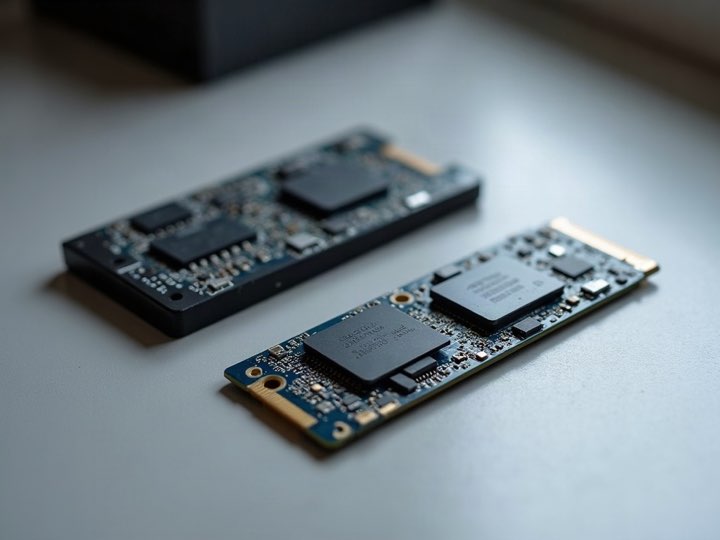
The short version
Secure erase is a command built into the drive itself. Rather than the operating system writing over files from outside, the drive's own controller purges its contents from inside — including the parts the operating system was never able to see.
Why that difference matters
An SSD controller constantly moves data between cells to spread wear evenly, and it keeps spare capacity in reserve that the operating system cannot address at all.
So an overwrite pass run from Windows can write over every block it can reach and still leave copies of old data sitting in cells it never had access to. The controller knows about those cells. Nothing outside the drive does.
Overwrite, from outside
The operating system writes over every block it can reach. Cells it cannot address keep their old copies.
Secure erase, from inside
The drive’s own controller purges every cell, including the ones nothing outside the drive can see.
On mechanical hard drives
A spinning drive stores bits magnetically in fixed physical locations, so overwriting a sector genuinely replaces what was there. Overwriting works properly on mechanical drives in a way it does not on flash.
What we do
Every storage device we buy is securely erased at no charge once the purchase is complete, and you are welcome to watch if you ask. Ask for a Certificate of Data Destruction and we will print it before you leave.
The erase follows the NIST 800-88 guidelines for media sanitization: the process above, every time, and a certificate documenting it if you want one.
Common questions
Is secure erase as good as physically shredding the drive?
For a drive being resold, it is the right tool — shredding a working drive destroys the thing that gave it value. For a drive being retired permanently, physical destruction is the stronger answer.
How long does it take?
On most modern SSDs, seconds — the controller invalidates its encryption keys rather than writing over every cell. Mechanical drives take considerably longer because the data really does have to be overwritten.